
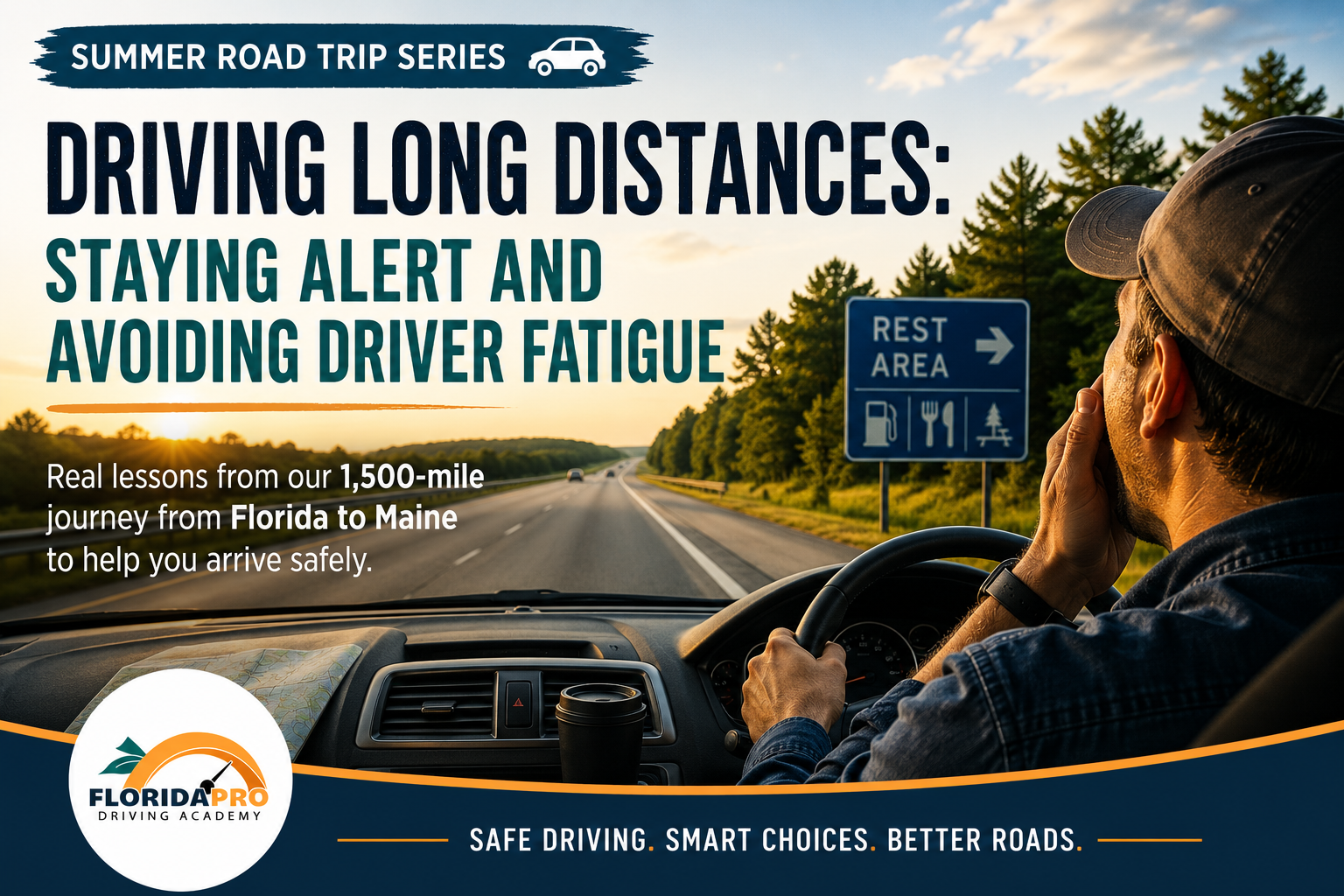
Most drivers spend time preparing their vehicle for a long road trip, but many forget to prepare the most important part of the journey—the driver. After driving nearly 1,500 miles from Florida to Maine, we were reminded that staying alert is just as important as checking your tires or changing your oil.
Driving is far more mental than physical. Being alert, focused, and in a healthy state of mind not only increases your safety but also makes the trip much more enjoyable. Long-distance travel can be stressful, but a little planning and setting realistic expectations can go a long way toward reducing that stress.
Why Driver Fatigue Matters
One of the most overlooked dangers on a road trip is driver fatigue. While it can be difficult to determine exactly how many crashes are caused by drowsy driving, the National Highway Traffic Safety Administration (NHTSA) reported that 644 people were killed in drowsy driving crashes in 2024. The actual number is likely much higher because fatigue is often difficult to identify after a crash.
Fatigue slows reaction time, affects judgment, and reduces your ability to recognize hazards. Unlike many other driving hazards, fatigue usually develops gradually, making it easy to ignore until your driving performance has already been affected. In many ways, it can be just as dangerous as driving while distracted or impaired.
A Lesson We Learned Before Our Trip
We had originally scheduled a departure date, but after taking an honest look at how tired we were, we decided to postpone the trip by one day so we could get some much-needed rest.
I realize that delaying a trip isn't always possible. Vacation schedules, hotel reservations, and limited time off from work don't always provide that flexibility. Fortunately, because of previous family travel experience, I had anticipated this possibility and built a little extra time into our schedule. Looking back, it was one of the best decisions we made.
Before leaving, we planned where we would stop for fuel, who would be driving during different portions of the trip, what snacks we would bring, and approximately when we expected to stop. We also planned our travel times through major metropolitan areas and checked for major construction zones that might delay our trip. We'll discuss our route planning and why it made such a difference in our next article.
Planning for a Safer Trip
This trip wasn't about sightseeing. Our goal was simply to travel safely and efficiently from Tampa to Maine.
One unique part of this journey was that my teenage son, who has earned his learner's permit, would also be gaining valuable driving experience. He has shown good judgment and has developed into a capable new driver. While he would be driving portions of the trip, I also knew I probably wasn't going to get much rest while he was behind the wheel. That's simply part of being a parent and a driving instructor.
Take Regular Breaks
We tried to follow the recommendation of taking a break every two to three hours. Even a short stop for a few minutes makes a difference. It gives your mind a chance to reset, allows you to stretch your muscles, and helps reduce fatigue before it becomes a safety problem.
If you notice any of these warning signs, don't ignore them—it's time to pull over and take a break.
1. Highway Hypnosis
This is very common during long interstate drives. Your mind begins to wander, you lose focus, and your reaction time may become delayed. If you can't remember the last several miles you've driven, that's a good indication that you need to stop and take a break.
2. Heavy Eyelids
You find yourself blinking more often, rubbing your eyes repeatedly, or struggling to keep them open.
3. Difficulty Maintaining Your Lane
You notice yourself drifting within your lane, weaving slightly, or making frequent steering corrections to stay centered.
4. Frequent Yawning
Everyone yawns occasionally, but repeated yawning during a long drive is often your body's way of telling you that it's becoming tired.
Other Ways to Stay Alert
Regular breaks are one of the best ways to fight fatigue, but there are other things that can also help.
Bring healthy snacks and drink plenty of water throughout the trip. Staying hydrated can help you stay more alert, while heavy meals and sugary snacks often leave you feeling sluggish later.
Many people rely on coffee or energy drinks during long trips. While caffeine may provide temporary alertness, it is not a long-term solution. If you're truly tired, no amount of caffeine can replace proper rest.
Listening to music, talking with passengers, or even an interesting podcast can help keep your mind engaged. Just be careful that anything you choose doesn't become a distraction from the driving task. Avoid activities that take your eyes or mind away from the road, such as scrolling through your phone or adjusting navigation while the vehicle is moving.
If another licensed driver will be taking over later in the trip, encourage them to relax and rest while they're a passenger instead of staying actively involved in conversations.
Considerations for Night Driving
Driving at night has both advantages and disadvantages.
On the positive side, you'll usually encounter less traffic, cooler temperatures, and in some areas, fewer construction delays.
However, your body may not cooperate if driving overnight isn't part of your normal routine. Most people have certain times during a 24-hour period when they naturally become less alert. For me, that's usually between 2:00 and 3:00 in the afternoon. During that time, I can definitely feel my energy level drop, so I try to avoid scheduling mentally demanding tasks—including long periods of driving.
Night driving presents similar challenges. If your body is used to sleeping at night, your brain naturally wants to do the same. In addition, there's a greater chance of encountering other drivers who may be tired or impaired, and reduced visibility makes it more difficult to identify hazards, wildlife, or pedestrians. Slowing down slightly at night can give you additional time to recognize and react to unexpected hazards.
Final Thoughts
Preparing your vehicle is essential before any long road trip, but preparing yourself is just as important.
If you recognize the warning signs of fatigue, don't try to push through them. Take a break, switch drivers if possible, or stop for the night if necessary. Arriving a little later is always a better option than risking your safety or the safety of everyone else on the road.
A safe road trip begins with a well-maintained vehicle—but it also begins with a well-rested driver.
What We Learned on This Trip
One of the biggest lessons we learned was to be patient and adaptable. No matter how much planning you do, things won't always go exactly as scheduled.
Not everyone has the same bathroom schedule, energy level, or eating habits. Some people can fuel up and be back on the road in five minutes, while others might spend a little extra time browsing the souvenirs at Buc-ee's. Construction zones, traffic, and unexpected delays are simply part of a long road trip.
I'm naturally more of a planner and like to stay on schedule. However, this trip reminded me that flexibility is just as important as preparation. Sometimes the best memories come from the unexpected moments, and a little patience can make the trip much more enjoyable for everyone.
Remember, there's no award for reaching your destination first. The goal of every road trip should be arriving safely and creating memories you'll enjoy long after the journey is over.
Next Stop on Our Journey
We quickly learned that planning a route involves much more than simply following GPS. In our next article, we'll share how traffic, construction, fuel stops, and timing our drive through Washington, D.C., and New York City affected our trip—and what we'd do differently next time.
Summer Road Trip Series
Coming Next: Article 3 – Choosing the Best Route: What We Learned Driving Through Washington, D.C., and New York City
Important Links
Frequently Asked Questions – Florida Pro Driving Academy
How it Works – Florida Pro Driving Academy
Helpful Resources
Drowsy Driving: Avoid Falling Asleep Behind the Wheel | NHTSA
Drowsy Driving: Asleep at the Wheel
About the Author
Randy is the founder of Florida Pro Driving Academy and a Florida traffic safety educator. With decades of experience in traffic safety and driver education, he enjoys sharing practical driving tips that help motorists become safer, more confident drivers.